










The Government’s Budget leaves major gaps in Britain’s defence and national security plans despite headline commitments to increase defence spending, a leading think tank has warned.
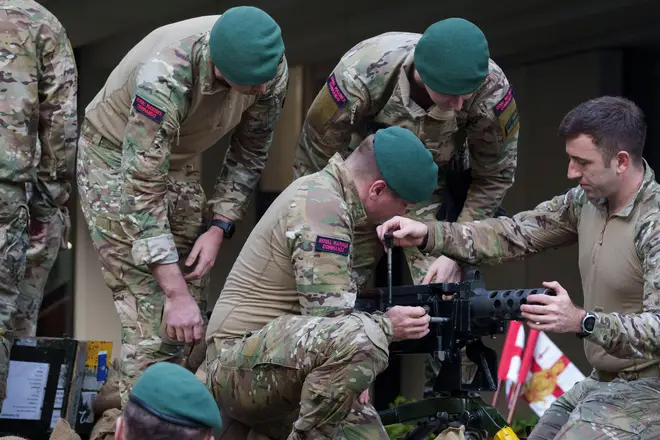
The comments comes against the backdrop of renewed scrutiny of the UK’s defence readiness, after the Army paused use of its Ajax armoured vehicles when around 30 soldiers became unwell during a training exercise on Salisbury Plain at the weekend.
Some soldiers reportedly emerged vomiting from the vehicles, while others were shaking uncontrollably, according to the Times.
The Ministry of Defence said symptoms linked to noise and vibration prompted Defence Minister Luke Pollard to halt all Ajax training for two weeks “out of an abundance of caution” while a safety investigation takes place.
The pause comes only weeks after the £6.3 billion programme was declared to have reached initial operating capability, despite years of delays caused by similar issues.
Against that backdrop, the Henry Jackson Society said the Budget’s defence pledges still fall short of what is required to meet a rapidly deteriorating threat environment.
null
The Government has recommitted to raising defence spending to 3 per cent of GDP by 2035, but analysis from the Office for Budget Responsibility (OBR) shows that the wider ambition to reach 3.5 per cent would require around £32 billion in today’s money, with no plan in place to fund it.
The OBR also confirms that “Single Use Military Equipment”, including missiles, complex weapons and warships, has been reclassified from day-to-day resource spending into capital budgets.
The change subjects the assets to depreciation but does not add capability or provide additional defence funding. Analysts say the shift masks growing pressure on the Ministry of Defence’s real resource budget.
Beyond defence, the Budget maintains protected spending for the NHS, schools, defence and overseas aid. According to the OBR, this forces unprotected departments such as the Home Office, policing, border security and several security agencies to absorb real-terms cuts averaging 3.3 per cent a year in the final years of the forecast period, potentially weakening the UK’s wider security infrastructure.
Rising inflation is eroding budgets further, with the OBR warning that higher prices have already reduced real departmental spending growth and undermined the purchasing power of defence programmes.
Several significant pressures remain unfunded, including a projected £1.4 billion shortfall in the Home Office asylum budget as small-boat arrivals rise, a £14 billion accumulated deficit in local authority SEND provision, and continued delays and underspends in capital budgets that threaten defence modernisation.
Dr Alan Mendoza, Executive Director of the Henry Jackson Society, said the Budget “talks up defence investment, but the numbers simply don’t match the rhetoric”.
“The Government sets ambitious targets, yet the OBR shows a £32 billion black hole under its 3.5 per cent defence pledge. Without a funding plan, that isn’t a strategy, it’s a slogan,” he said.
“Worse still, while defence is protected, the rest of the national security system is being cut in real terms. The Home Office, counter-terror policing, border security and parts of our intelligence architecture all face reductions of more than 3 per cent a year. You can’t defend Britain while hollowing out the agencies that keep extremists and organised criminals off our streets.”
Andrew Fox, a former Parachute Regiment major and Associate Research Fellow at the Henry Jackson Society, said the Budget still fails to match the scale of current threats.
“Recent warnings from senior MoD figures that the UK must prepare for the possibility of direct conflict with Russia within the next five years further underline the gap between the Government’s rhetoric and its resourcing,” he said.
“The Budget does not provide the funding needed to accelerate readiness, rebuild stockpiles or strengthen NATO-facing force posture at the pace the strategic environment demands.”