







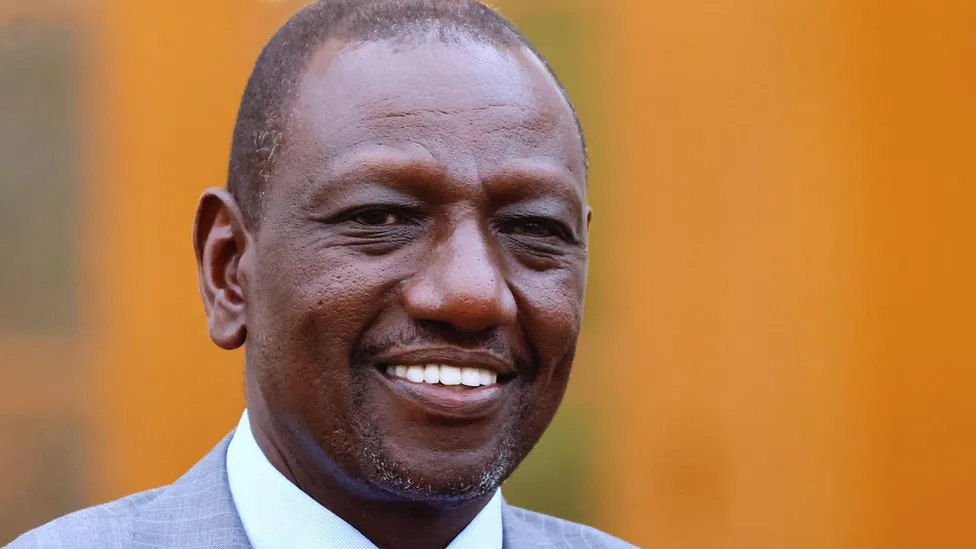

Some Kenyans are mockingly referring to President William Ruto as Zakayo – Swahili for the biblical figure Zacchaeus, who is portrayed in the Christian holy book as a greedy tax collector who climbed a tree to see Jesus.
This is because Mr Ruto has introduced a raft of new taxes, and raised old ones, since he was elected president in August 2022, making him unpopular with many Kenyans who believe he has betrayed his campaign pledge to champion the interests of “hustlers” – those who struggle financially.
Mr Ruto has acknowledged that the taxes are “painful” but, in an Independence Day speech on 12 December, said the sacrifices the nation was making “would make our freedom fighters proud”.
For him, higher taxation is necessary to reduce government borrowing, and bring down the national debt, which has soared to 10 trillion shillings ($65bn; £51bn).
“We have made the right choices, sometimes taking very difficult and painful decisions, to steer Kenya back from the edge of the catastrophic cliff of debt distress,” he said.
Nor does the president mind being compared to the biblical figure.
“Since I have already been referred to as Zakayo in some areas, maybe we will have a tax collector day,” he said in May.
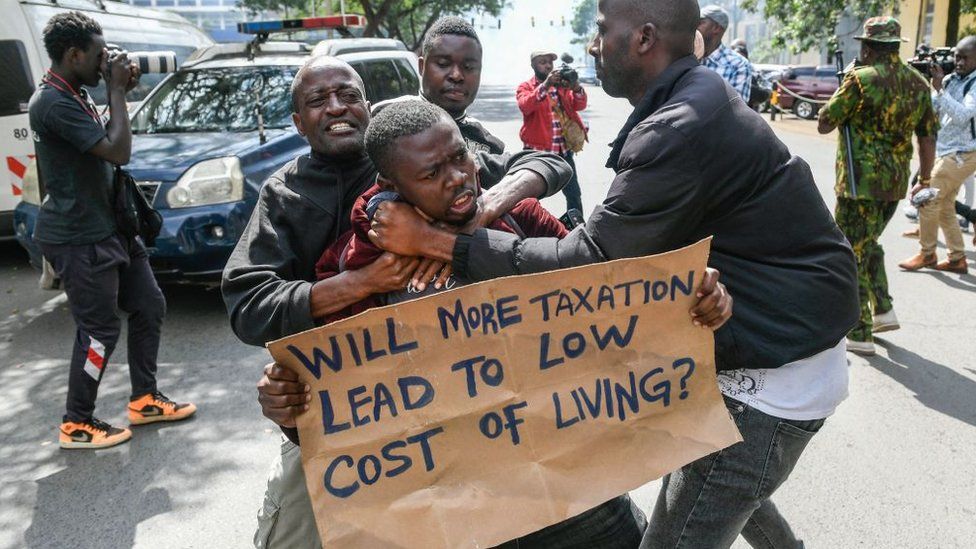
But many Kenyans are not in agreement with him. The pain of taxes dominate everyday conversations, especially with the rising cost of living.
They also say the taxes are only helping to fund extravagance in government rather than improve public services.
This perception has grown, especially after Kenya’s Controller of Budget – an independent office that oversees the use of public funds – recently raised concern over the high taxes amid “wasteful” spending, including on domestic and international travel by government officials.
President Ruto, who has made over 40 trips abroad in about a year, has defended his travelling, saying he was seeking foreign investment and job opportunities for Kenyans.
In about the same time, 70,000 private-sector jobs have been lost amid a drastic rise in operating costs, and the closure of some businesses, according to the latest report by the Federation of Kenyan Employers (FKE).
It warns of the risk of more job losses, pointing out that 40% of employers are still considering scaling down their operations.
FKE has called for the government to review taxes, but businesses complain that the government is not listening.
Economist Ken Gichinga says Kenya has been discouraging business by placing a heavy tax burden on companies that are supposed to create jobs, make profits and boost government finances.