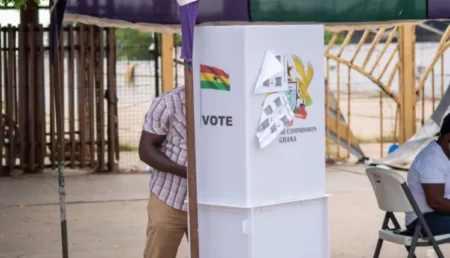









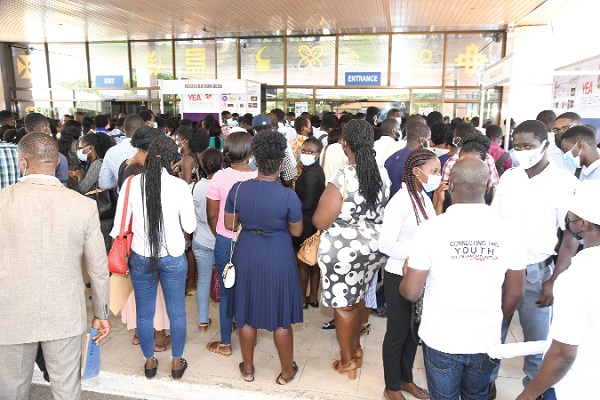

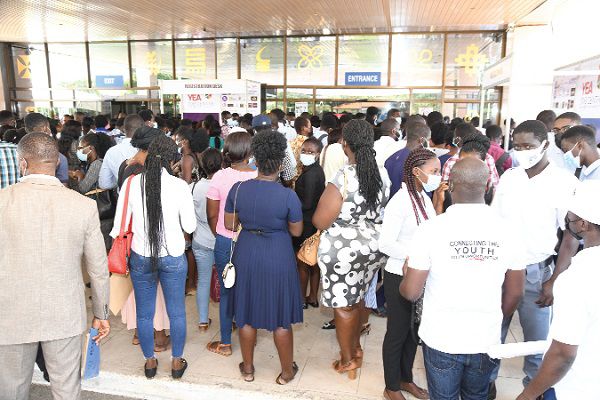
Ghana’s unemployment rate eased to 13.6 per cent by the end of 2024, down from 14.6 per cent in 2023, reflecting a modest one-percentage point improvement.
The figures are contained in the latest Annual Household Income and Expenditure Survey (Fourth Quarter Labour Statistics 2024) released by the Ghana Statistical Service.
The data reveal that the challenge remains most pronounced among the youth, with 22.5 per cent of Ghanaians aged 15 to 35 currently unemployed, underscoring persistent pressures on first-time jobseekers and graduates despite the broader gains in employment.
In Q4 2024, the data paints a mixed but instructive picture: total employment rose to 12.73 million — an increase of 1.15 million year-on-year, while the number of unemployed persons also climbed by roughly 200,000 compared with Q4 2023, signalling rapid labour-force growth that outpaced absorption.
This combination suggests expanding opportunity but continued weaknesses in job quality and the economy’s ability to absorb new entrants quickly.
Gender dynamics in Q4 are notable as female employment has consistently exceeded male employment through 2024 Q4, and the employment gap widened from about 632,000 in 2022 Q1 to roughly 1.12 million in Q4 2024, a sign that female labour participation and job creation for women have been strong in absolute terms.
At the same time, the survey highlights persistent disparities in unemployment and underemployment by sex and locality, which point to uneven job quality and differing access to stable, formal work.
The GSS also flags high levels of NEET (youth not in employment, education or training) across age cohorts, calling out NEET as a major contributor to youth exclusion and long-term labour underutilisation.