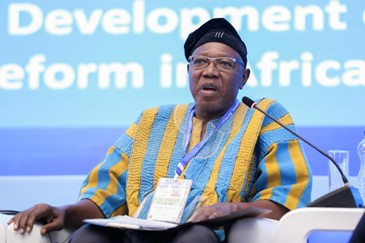










Vice President of IMANI Africa, Kofi Bentil, has stated that while GoldBod has played a role in the recent appreciation of the cedi against major foreign currencies, its overall impact is relatively limited accounting for no more than 10 percent of the gains.
Speaking in an interview, Mr. Bentil, who is also a private legal practitioner, explained that broader global factors are largely responsible for the cedi’s performance, particularly the weakening of the US dollar.
“GoldBod has done something, but its effect on the cedi is less than 10 per cent. Globally, the dollar has depreciated,” he said.
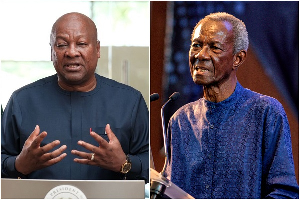
Commenting on President John Mahama’s positive approval ratings in his first year, Bentil noted that such early optimism is not unusual, adding that the real test of leadership lies in how challenges are managed over the remaining years of the term.
“It is not surprising. The real challenges are what will happen in the next three years,” he observed.
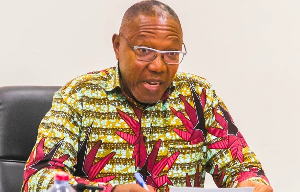
Earlier, Honorary Vice President of IMANI Africa, Bright Simons, also acknowledged that GoldBod contributed to the cedi’s relative stability in 2025, but stressed that it is not the dominant factor influencing exchange rates.
He explained that exchange rate movements are shaped by multiple variables, not a single policy or institution.
“Because Ghana’s exports are heavily dominated by gold and exports play a key role in exchange rate movements, we must also consider that gold prices rose by over 70 per cent in 2025 alone,” Simons wrote in a post on X, while commenting on the reported US$214 million losses incurred by the Bank of Ghana through gold trading.
According to Simons, the reported US$214 million loss on approximately US$5 billion worth of gold traded by GoldBod is real and significant exceeding the loss rates that have weakened COCOBOD.
However, he cautioned that these figures do not present the full picture.
He added that the Bank of Ghana also bears additional costs, including sterilisation and opportunity costs, which further complicate the situation.
Simons argued that the losses are structural in nature, noting that GoldBod is often compelled to buy gold at higher prices and sell at lower prices more frequently than is economically sustainable.
Without continued central bank support, he warned, GoldBod would face insolvency within about 11 months.
“Its undisbursed 2025 budget allocation of US$279 million would last less than one year,” he noted.
TAGGED:GoldBodKofi BentilVice President of IMANI Africa
SOURCES:The Ghana Report
Story By:
Will Agyapong