







The agreement may see the UK economy gain access to £5.1bn worth of annual benefits, the government claims.
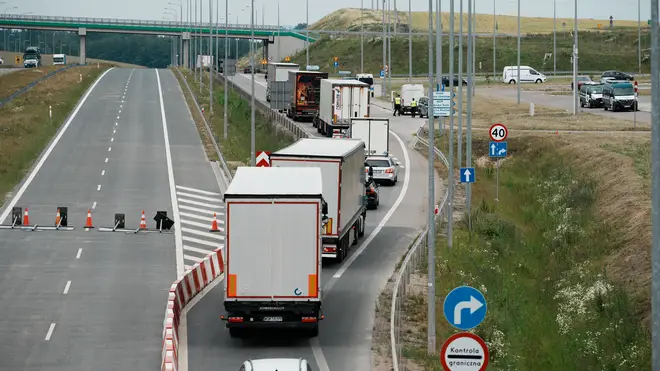
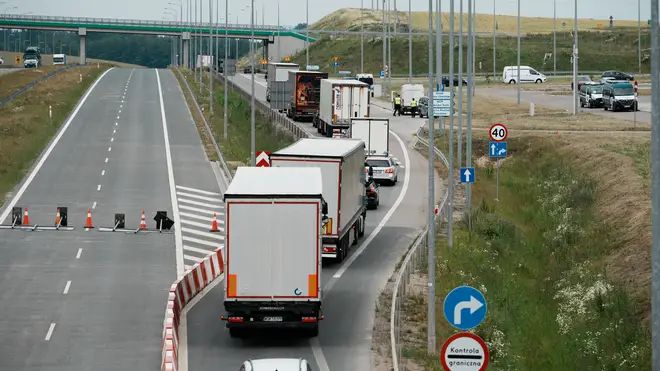
The UK and EU have agreed on a draft deal to do away with post-Brexit checks on food and agriculture exports, as state leaders prepare for the UK-EU summit later this month.
The draft material for the so-called “SPS” (sanitary and phytosanitary) agreement has been circulated to EU nations in Brussels for consideration at a meeting on Wednesday.
Paperwork for deals on emissions trading and a youth travel and work scheme has also been circulated, as well as a 15-page draft joint statement for top leaders of the UK and across the EU.
The food agreement marks the most noteworthy part of the so-called Brexit reset so far, doing away with checks and red tape that exporters faced after the UK left the EU a decade ago.
The agreement may see the UK economy gain access to £5.1bn worth of annual benefits, the government claims.
In return, Britain is expected to commit to what is known as “dynamic alignment” – or the process of observing and adapting to existing EU regulations on plant, animal and food trade standards.
Each of these components was up for discussion when Sir Keir Starmer was in Downing Street – but the process has slowed down following the selection of a new PM in July.
This comes as Andy Burnham appears to be more open to pro-EU relations than his predecessor – stating that he would like to see Britain back in the EU in his lifetime, unlike Sir Keir, who said the UK would not rejoin the bloc in his lifetime.
The prime minister insisted there is “no confusion at all” over his position on rejoining the European Union as questions mount ahead of his government’s October Budget on Wednesday.
Kemi Badenoch, the Leader of the Conservatives, accused the Prime Minister of creating confusion, before asking directly asked if he wanted a referendum on rejoining the EU.
Speaking at Prime Minister’s Questions, Mr Burnham said: “There is no confusion at all.
“The Government has a collectively agreed position, which I have set out today.
He went on: “It is entirely consistent with everything that I’ve said, including in the by-election.
“The red lines in our manifesto, including on freedom of movement, will stay in place firmly for the whole of this Parliament.”
He said he would not defend the deal negotiated by the Conservatives, which he called “bad for growth and bad for control of immigration”.
On Monday, the prime minister ruled out rejoining the European Union before the next general election – but said he would like to see the UK rejoin in his lifetime.
He said Brexit had not panned out ‘how people said it would at the time’ and that it had led to a weakened economy and weaker control of immigration.
“I’m not proposing, rejoining in this parliament,” he said.
“We’re way, way, away from, from that at this particular moment in time.
He went on: “What I am saying is we need to take some practical steps to make the arrangement work better than the arrangement we’ve got right now.”
Mr Burnham will meet EU chiefs, including European Commission president Ursula von der Leyen, in Brussels on November 20, as he seeks to strike a better deal with the bloc.
The Prime Minister also wants a discussion around the long-term future of the UK-EU relationship, 10 years after the country voted in favour of Brexit.
In an interview on Monday, the PM said that after a “decade of experience” since Brexit, it has not played out “how people said it would at the time”.
He referred to a “weakened economy” and “weakened” control of immigration – as he touched on the subject of the small boats crisis – one he says arose due to the fact the UK “can’t return people”.
It comes after the PM said a closer economic relationship with the EU could add more than £10bn a year to the UK economy by 2040.
Mr Burnham said: “I don’t think things have worked out as people said they would at the time, particularly when it comes to immigration.
“I think we’ve got weaker control now. The reason the small boats crisis has arisen is because we can’t return people, and people know we can’t do that in the same way that we used to be able to do.”
But he added: “I’m not proposing any changes in this Parliament. I’m not going to move away from the red lines that were in the Labour manifesto.
“I am respecting what I said to the voters in Makerfield, but I’m not going to say this morning, sitting here, that the deal we’ve got at the moment is good enough for Britain. I don’t think it is good enough for Britain.
“I think we can make it better and I’m going to lead a discussion about how do we make it better in a way that people can support.”
It comes after the EU’s chief Brexit negotiator has told LBC that freedom of movement would be a “key condition” for Britain to return to the EU single market, warning there can be “no cherrypicking”.
Speaking to Andrew Marr ahead of next month’s EU-UK summit in Brussels, Michel Barnier said the bloc remains open to closer defence and foreign policy co-operation with Britain.
Mr Burnham was critical of the “revolving door” style of immigration we saw as part of the freedom of movement previously.
He said: “We need to be honest about how it’s changed things in the last decade. We have a situation now where longer-term permanent migration has replaced what was freedom of movement.”
“In the past, it was a revolving door,” he added. “People would come and, say, spend two or three years and then go back. This is a change that we’ve got, and I think we need to be honest about all of these things and not say that we can’t even have a discussion about any of these things.”
By Georgia Bell